

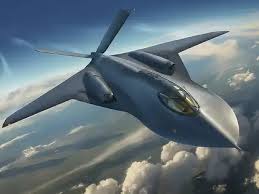
India’s new 12,000 km bomber could hit New York without needing to refuel and carrying BrahMos missiles.
India plans to build an ultra-long-range strategic bomber for the Air Force, designed to strike targets more than 12,000 kilometres away. Modelled partly on Russia’s TU-160 and America’s B-21 Raider, it aims to expand India’s nuclear deterrence and global reach. The project, known as the Ultra Long-Range Strike Aircraft, will carry BrahMos-NG missiles and possibly other advanced weapons. Talks with Russia and France for technology transfer are underway, with the first prototype likely by 2035.
India is laying groundwork for a bomber that can hit targets over 12,000 kilometres away. This marks a sharp turn in defence policy, from regional focus to intercontinental reach. Defence analysts say this project, called the Ultra Long-Range Strike Aircraft (ULRA), could be a game changer for the Indian Air Force.
The Defence Ministry says modern warfare now cuts across cyber, space and long-range air strikes.
China’s H-20 is moving fast, while the US holds an edge with its B-2 Spirit and the incoming B-21 Raider. A senior Air Force official said, “Our nuclear triad covers land and sea well, but we need a platform that can strike anywhere from the skies too.”
Lessons from the Russian TU-160 ‘Blackjack’
The Russian TU-160 ‘Blackjack’ remains the world’s heaviest and fastest supersonic bomber. Its range is about 12,300 kilometres and it can carry up to 40 tons. One DRDO engineer said, “We are looking at the TU-160 as a regional model and adapting what suits our needs best.”
Going further than the B-21 Raider
Northrop Grumman’s B-21 Raider should clock around 9,300 kilometres. India wants its bomber to fly past that limit. That means it could reach targets in the US, Europe, Africa or Australia without refuelling.
The plan includes stealth technology, radar dodging features and automated flight systems. The aim is clear: stay hidden, reach far, hit hard.
Where will the technology come from
Building this from scratch is no small task. The government, DRDO, HAL and the Aircraft Development Agency are leading the charge. Technology talks are open with Russia and France for transfer deals. One key piece is the engine. Engineers might adapt the GE-414 or Russia’s NK-32 to fit the power and range needed.
Key facts about this potential bomber:
Range: Over 12,000 kilometers.
Payload: Expected to carry up to four BrahMos-NG missiles, with a range of 290-450 kilometers, capable of striking airfields, radars, command centers, and potentially nuclear facilities. Other potential weapons include short-range ballistic missiles like the Agni-1P, laser-guided bombs, and anti-radiation missiles.
Technology: Likely to incorporate stealth features, radar avoidance capabilities, and automated flight systems. It is being modeled, in part, on the Russian TU-160 “Blackjack” and the American B-21 Raider. Some sources suggest it may utilize a swing-wing design for improved fuel efficiency.
Development: A collaborative effort involving the Indian government, DRDO, HAL, and ADA. Talks are underway with Russia and France for potential technology transfer. A specialized turbofan engine may be based on the GE-414 or Russia’s NK-32.
Timeline: The first prototype is anticipated to fly between 2032 and 2035. Initial research and dummy models have already begun.
Strategic Implications: This bomber would provide India with global strike options, strengthen its nuclear second-strike capability, and enhance its leverage in the Indo-Pacific region. It demonstrates India’s ambition to move beyond regional balance and reinforce its nuclear triad with a credible airborne platform.
The development of this strategic bomber signifies a major shift in India’s defense strategy, emphasizing long-range power projection and deterrence capabilities.
https://www.linkedin.com/company/yuvamorcha-com/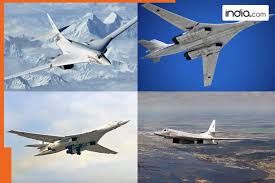



Thanks for sharing. I read many of your blog posts, cool, your blog is very good.