


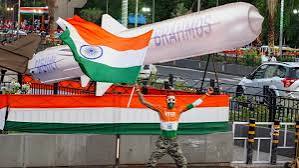


India pushes arms exports after Pakistan clash showcases weaponry.
India is actively pursuing a strategy to boost its arms exports, particularly after the recent clash with Pakistan, referred to as “Operation Sindoor”, where indigenous weaponry was showcased. This move is part of India’s broader “Make in India” initiative and reflects a shift from being a primarily arms-importing nation to an exporter.
Here’s a breakdown of the situation:
The use of Indian-made missiles and drones in the conflict served as a demonstration of their capabilities. The Indian government and defense industry are using this success to secure more overseas sales.
India aims to significantly increase its defense exports, with a target of approximately $5.8 billion by 2029, up from ₹236 billion in the previous year. The overall target for defense production is even higher, aiming for ₹3 lakh crore by 2029.
Defence Public Sector Undertakings (DPSUs) have seen a substantial increase of 42.85% in their exports in FY 2024-25, indicating growing international acceptance.
India’s defense exports now include a wide range of items such as ammunition, arms, subsystems, and components, being exported to approximately 80 countries.
Notable export items and deals include BrahMos supersonic cruise missiles sold to the Philippines and ongoing discussions for deals with other countries. Discussions are also underway for other systems like the Akash missile and Pinaka rocket launcher.
The government has implemented reforms to support the domestic defense industry, simplifying licensing and export authorization processes.
India is positioning itself as a competitive player in the global arms market, leveraging its indigenous capabilities and recent demonstrations to drive exports and reduce reliance on imports.
https://www.linkedin.com/company/yuvamorcha-com/




Your article helped me a lot, is there any more related content? Thanks!