Sharing is caring!
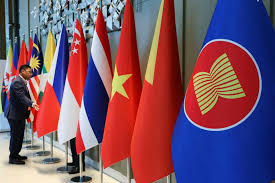
India and Asean are growing apart. Blame tariffs- Officials in New Delhi worry the bloc is drifting towards China.
Based on recent developments, there are concerns in New Delhi about India and ASEAN growing apart, with officials worrying the bloc is drifting towards China.
Here’s a breakdown of the situation:
1. Trade deficit and tariffs
India’s trade deficit with ASEAN has significantly increased since the India-ASEAN Free Trade Agreement (FTA) was signed in 2009.
The trade deficit increased from $5 billion in 2010–11 to $43.57 billion in 2022–23.
Some officials and industry voices blame the FTA for allowing the dumping of Chinese goods in India via Southeast Asian countries, undermining domestic manufacturing.
This has fueled calls for a review of the India-ASEAN Trade in Goods Agreement (AITIGA), which began in 2024 and is expected to conclude in 2025.
India wants to address concerns about the existing FTA and rectify what it considers an inequitable tariff liberalization under the agreement.
2. Slow progress in FTA review
Despite multiple rounds of review meetings, there has been little progress on key issues related to the AITIGA review, according to sources.
Some officials allege that certain ASEAN members are deliberately delaying the process as the current structure disproportionately benefits them.
3. The China factor
India’s concerns are exacerbated by ASEAN’s closer economic ties with China.
ASEAN nations, including Vietnam, Malaysia, Indonesia, Thailand, Singapore, and the Philippines, are major trading partners for China.
In 2023, ASEAN was China’s largest trading partner, surpassing the EU in 2020.
China and ASEAN have completed negotiations on an upgraded free trade deal (ACFTA 3.0), which is expected to deepen their economic integration.
4. India’s evolving stance
India is considering strong measures, including potentially terminating the AITIGA if its concerns are not addressed, according to the Hindustan Times.
India has adopted a more pragmatic approach to trade policy, prioritizing national interests and seeking fairer trade agreements.
New Delhi is also actively engaging with other economies, including the US, European Union, and Australia, to diversify its trade relations.
In essence, India’s relationship with ASEAN is at a crossroads. While India emphasizes its “Act East” policy and strengthening regional ties, it also seeks a more balanced and equitable trade relationship with the bloc, particularly in light of growing Chinese influence in the region. The outcome of the AITIGA review talks will be crucial in determining the future trajectory of India-ASEAN relations.