Sharing is caring!
Japan To Shift Legacy Semiconductor, LCD And Battery Production To India To Reduce China Dependence: Report
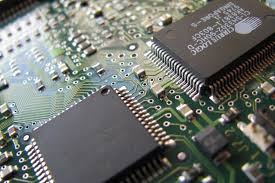
Japan and India are reportedly moving forward with plans to transfer production of older semiconductor and LCD screen technologies to India, as both nations seek to reduce their dependence on Chinese manufacturing and strengthen economic security cooperation.
The initiative focuses on so-called legacy technologies that rely on mature manufacturing tools and techniques rather than cutting-edge processes, Nikkei Asia reported.
These older semiconductors remain crucial for various applications, including voltage control in electric vehicles and inverters that improve energy efficiency in air conditioners and refrigerators.
According to recent reports, Japan is shifting the production of legacy semiconductors, LCDs, and batteries to India in an effort to reduce its manufacturing reliance on China. The joint initiative is driven by both countries’ desire to strengthen economic security and diversify supply chains. A comprehensive plan, created by the Japan External Trade Organization (JETRO) and the Confederation of Indian Industry (CII), is set to be formally announced during a summit between Indian Prime Minister Narendra Modi and Japanese Prime Minister Shigeru Ishiba.
Rationale and strategic benefits
For both countries, this manufacturing shift is a strategic move that aligns with several key objectives:
Reduced dependence on China: Both Japan and India are seeking to mitigate the economic risks associated with a heavily concentrated supply chain in China. This strategy helps build a more resilient and diversified supply chain.
India as a new manufacturing hub: Japanese companies are facing increased pressure from low-cost Chinese competition, making the transfer of legacy technology production to India a cost-effective solution. For India, this move aligns with its ambitions to grow its domestic manufacturing capabilities and become a significant alternative manufacturing base.
Intellectual property protection: India is reportedly considering adopting legislation similar to Japan’s to protect intellectual property and technology, providing a more secure environment for the transfer of Japanese technology.
Access to new markets: For Japanese manufacturers, moving production to India offers access to a large domestic market and positions India as a gateway to other high-growth markets, including the Middle East and Africa.
Scope of the manufacturing transfer
The initiative focuses on “legacy” or “mature” technologies, which utilize established tools and manufacturing processes rather than the latest cutting-edge techniques. Specific technologies included in the production transfer plan are:
Legacy semiconductors: Older, mature semiconductor chips are still critical for a wide range of applications. These include voltage control in electric vehicles, inverters for appliances like air conditioners and refrigerators, and other everyday electronics.
LCD screens: Japan, a pioneer in the LCD industry, has lost market share to cheaper Chinese alternatives. The plan includes transferring this older LCD technology to India, where it can be produced more competitively.
Batteries: This includes storage batteries and lithium-ion batteries, particularly for electric vehicles. Japanese companies are already moving forward with joint production agreements and investments in this sector.
Other equipment: The plan also covers other technologies, such as solar power equipment and compressors.
Early signs of implementation
Several Japanese companies have already begun executing plans that align with this new strategy:
A Japanese storage battery manufacturer is reportedly preparing to sign a memorandum of understanding with an Indian company to begin joint production.
A Japanese electrical machinery company has started constructing a compressor plant in Tamil Nadu.
Other Japanese firms are also eyeing the Indian market as a key part of their “China Plus One” strategy, investing and forming strategic partnerships to leverage India’s growing market and competitive labor costs.