Sharing is caring!
Narendra Modi at 75: The Journey, The Leadership, The Legacy
New Delhi, September 17, 2025 — Today, Prime Minister Narendra Damodardas Modi turns 75.
From his beginnings as a tea seller in a small Gujarat town to becoming the most dominant Indian leader of the 21st century, Modi’s journey reflects a story of ambition, resilience, and transformation. Over the past two decades, he has redefined not only Indian politics but also the nation’s global stature. On this milestone birthday, it is worth revisiting the life, achievements, challenges, and enduring legacy of Narendra Modi.
Early Life and Formative Years.
Narendra Modi was born on 17 September 1950 in Vadnagar, Gujarat, to a modest family. His father, Damodardas Mulchand Modi, ran a tea stall at the local railway station, while his mother, Hiraben Modi, was a homemaker. Modi often helped his father serve tea, a childhood memory that would later become symbolic in political narratives of humble origins.
Growing up, Modi displayed discipline, curiosity, and an ability to connect with people. He joined the Rashtriya Swayamsevak Sangh (RSS) at a young age, which played a formative role in shaping his worldview. Through the RSS, he learned organisational discipline, networking, and ideological grounding that would guide his political journey.
He completed his schooling in Vadnagar, where teachers recalled him as a bright student with a flair for public speaking. Later, Modi pursued a BA in Political Science from Delhi University and a MA in Political Science from Gujarat University.
Though his marriage to Jashodaben Chimanlal Modi was arranged at a young age, Modi chose to dedicate himself to public life, spending much of his early years as a full-time pracharak (campaigner) for the RSS.
Rise in Politics: From Organiser to Chief Minister
By the late 1980s, Modi had transitioned from RSS work into the Bharatiya Janata Party (BJP). His sharp organisational skills earned him recognition. He played a key role in BJP’s campaigns in Gujarat and later at the national level, particularly in strategising yatras and outreach programmes.
Chief Minister of Gujarat (2001–2014)
In 2001, when Gujarat was reeling under political instability and the aftermath of a devastating earthquake, Modi was chosen to replace Keshubhai Patel as Chief Minister. Over the next 13 years, he shaped Gujarat into a model of industrial growth and infrastructural development.
Economic Growth: Under Modi, Gujarat witnessed rapid industrialisation, major investments, and a focus on electricity, roads, and water management. The Vibrant Gujarat Summit became a global investor platform.
2002 Riots: Modi’s tenure was marred by the communal riots of 2002. Critics accused his administration of failing to control the violence, while supporters defended him. Multiple inquiries later found insufficient evidence to prosecute him personally, but the episode remains one of the most debated aspects of his legacy.
Governance Reputation: Modi earned a reputation as an efficient administrator with a business-friendly image. By 2013, he was seen as a national leader capable of steering India’s development.
Prime Ministerial Journey.
2014: A Historic Mandate
In 2014, Modi led the BJP to a landslide victory in the general elections, winning 282 seats — the first single-party majority in India since 1984. His campaign, centred on development, governance, and “Achhe Din” (good days), resonated with voters.
2019: A Bigger Victory.
Five years later, in 2019, Modi returned with an even larger mandate, securing 303 seats for the BJP. This victory was driven by welfare schemes, strong national security messaging, and the abrogation of Article 370 in Jammu & Kashmir.
2024: Third Term in Office.
In 2024, despite anti-incumbency pressures, Modi’s leadership secured another win for the BJP-led NDA, reaffirming his dominance in Indian politics. By then, he had established himself as one of the longest-serving Prime Ministers after Jawaharlal Nehru and Indira Gandhi.
Major Policy Initiatives and Reforms.
1. Economic Transformation
Goods and Services Tax (GST) created a unified tax system across states.
Demonetisation (2016), aimed at curbing black money, sparked debates but reshaped cash and digital transactions in India.
Make in India encouraged manufacturing growth.
Startup India and Digital India pushed entrepreneurship and technology adoption.
2. Social Welfare and Infrastructure
Swachh Bharat Mission built millions of toilets, addressing sanitation and dignity for women.
Pradhan Mantri Awas Yojana provided affordable housing.
Ujjwala Yojana gave free LPG connections to rural households.
Jal Jeevan Mission expanded tap water supply.
Rural Electrification achieved near-universal electricity coverage.
3. Health and Pandemic Response
India launched Ayushman Bharat, the world’s largest government healthcare scheme.
During the COVID-19 pandemic, Modi oversaw one of the fastest vaccination drives in the world, producing vaccines domestically and exporting doses to other nations under “Vaccine Maitri.”
4. National Security and Governance
Abrogation of Article 370 in Jammu & Kashmir in 2019.
Citizenship Amendment Act (CAA), which triggered nationwide protests but underscored his government’s ideological stance.
Infrastructure upgrades along India’s borders and emphasis on military modernisation.
5. International Diplomacy
Modi’s foreign policy emphasised:
Stronger ties with the U.S., Japan, and European Union.
Strategic relations with the Middle East, securing energy and investments.
Leadership role in climate change negotiations and the Global South.
Expansion of India’s soft power through cultural diplomacy and diaspora engagement.
Leadership Style and Public Image.
Modi’s leadership is marked by:
Charismatic Communication: His oratory, social media presence, and ability to connect with masses have made him a formidable campaigner.
Centralised Governance: Modi is seen as a leader who takes decisive calls, sometimes criticised as overly centralised.
Personal Discipline: Known for early rising, yoga, and a frugal lifestyle, Modi cultivates an image of dedication and simplicity.
Strong Branding: “Modi” has become a political brand — symbolising development, nationalism, and transformation.
Criticism and Controversies.
2002 Gujarat Riots remain a stain on his political record.
Demonetisation and GST implementation were criticised for hurting small businesses.
Concerns around press freedom, dissent, and minority rights have been raised by domestic and international observers.
Farmer Protests (2020–21) against three farm laws forced his government into a rare rollback.
Despite criticisms, Modi’s approval ratings have remained consistently high compared to global peers.
Global Recognition and Awards.
Modi has received over 25 international honours, including:
Order of Zayed (UAE)
Legion of Honour (France)
Order of St. Andrew (Russia)
Champion of the Earth Award (UN, 2018)
These accolades highlight his global acceptance as a statesman.
At 75: Modi’s Legacy and the Road Ahead
As Narendra Modi turns 75, his political legacy is firmly established.
He is credited with:
Modernising India’s infrastructure at scale.
Expanding welfare schemes to reach millions.
Redefining India’s image globally.
Consolidating political power in unprecedented ways.
Looking ahead, challenges remain:
Job creation for India’s massive youth population.
Addressing climate change and sustainable growth.
Balancing nationalism with pluralism.
Navigating global geopolitics in an era of uncertainty.
Conclusion:
Narendra Modi’s life story is nothing short of remarkable — from a tea stall in Vadnagar to the world’s high tables of power. At 75, he remains not just India’s most influential leader but also a global figure whose policies and decisions impact millions. Loved by supporters, critiqued by detractors, Modi’s imprint on India’s destiny is undeniable.
As India reflects on his journey today, one truth stands clear: Narendra Modi’s rise is the story of modern India itself — a nation striving for progress, grappling with contradictions, and seeking its place in the world.
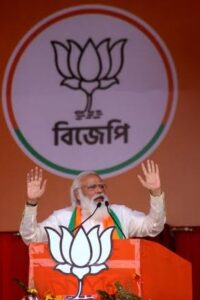
New Delhi, September 17, 2025 — Today, Prime Minister Narendra Damodardas Modi turns 75.
From his beginnings as a tea seller in a small Gujarat town to becoming the most dominant Indian leader of the 21st century, Modi’s journey reflects a story of ambition, resilience, and transformation. Over the past two decades, he has redefined not only Indian politics but also the nation’s global stature. On this milestone birthday, it is worth revisiting the life, achievements, challenges, and enduring legacy of Narendra Modi.
Early Life and Formative Years.
Narendra Modi was born on 17 September 1950 in Vadnagar, Gujarat, to a modest family. His father, Damodardas Mulchand Modi, ran a tea stall at the local railway station, while his mother, Hiraben Modi, was a homemaker. Modi often helped his father serve tea, a childhood memory that would later become symbolic in political narratives of humble origins.
Growing up, Modi displayed discipline, curiosity, and an ability to connect with people. He joined the Rashtriya Swayamsevak Sangh (RSS) at a young age, which played a formative role in shaping his worldview. Through the RSS, he learned organisational discipline, networking, and ideological grounding that would guide his political journey.
He completed his schooling in Vadnagar, where teachers recalled him as a bright student with a flair for public speaking. Later, Modi pursued a BA in Political Science from Delhi University and a MA in Political Science from Gujarat University.
Though his marriage to Jashodaben Chimanlal Modi was arranged at a young age, Modi chose to dedicate himself to public life, spending much of his early years as a full-time pracharak (campaigner) for the RSS.
Rise in Politics: From Organiser to Chief Minister
By the late 1980s, Modi had transitioned from RSS work into the Bharatiya Janata Party (BJP). His sharp organisational skills earned him recognition. He played a key role in BJP’s campaigns in Gujarat and later at the national level, particularly in strategising yatras and outreach programmes.
Chief Minister of Gujarat (2001–2014)
In 2001, when Gujarat was reeling under political instability and the aftermath of a devastating earthquake, Modi was chosen to replace Keshubhai Patel as Chief Minister. Over the next 13 years, he shaped Gujarat into a model of industrial growth and infrastructural development.
Economic Growth: Under Modi, Gujarat witnessed rapid industrialisation, major investments, and a focus on electricity, roads, and water management. The Vibrant Gujarat Summit became a global investor platform.
2002 Riots: Modi’s tenure was marred by the communal riots of 2002. Critics accused his administration of failing to control the violence, while supporters defended him. Multiple inquiries later found insufficient evidence to prosecute him personally, but the episode remains one of the most debated aspects of his legacy.
Governance Reputation: Modi earned a reputation as an efficient administrator with a business-friendly image. By 2013, he was seen as a national leader capable of steering India’s development.
Prime Ministerial Journey.
2014: A Historic Mandate
In 2014, Modi led the BJP to a landslide victory in the general elections, winning 282 seats — the first single-party majority in India since 1984. His campaign, centred on development, governance, and “Achhe Din” (good days), resonated with voters.
2019: A Bigger Victory.
Five years later, in 2019, Modi returned with an even larger mandate, securing 303 seats for the BJP. This victory was driven by welfare schemes, strong national security messaging, and the abrogation of Article 370 in Jammu & Kashmir.
2024: Third Term in Office.
In 2024, despite anti-incumbency pressures, Modi’s leadership secured another win for the BJP-led NDA, reaffirming his dominance in Indian politics. By then, he had established himself as one of the longest-serving Prime Ministers after Jawaharlal Nehru and Indira Gandhi.
Major Policy Initiatives and Reforms.
1. Economic Transformation
Goods and Services Tax (GST) created a unified tax system across states.
Demonetisation (2016), aimed at curbing black money, sparked debates but reshaped cash and digital transactions in India.
Make in India encouraged manufacturing growth.
Startup India and Digital India pushed entrepreneurship and technology adoption.
2. Social Welfare and Infrastructure
Swachh Bharat Mission built millions of toilets, addressing sanitation and dignity for women.
Pradhan Mantri Awas Yojana provided affordable housing.
Ujjwala Yojana gave free LPG connections to rural households.
Jal Jeevan Mission expanded tap water supply.
Rural Electrification achieved near-universal electricity coverage.
3. Health and Pandemic Response
India launched Ayushman Bharat, the world’s largest government healthcare scheme.
During the COVID-19 pandemic, Modi oversaw one of the fastest vaccination drives in the world, producing vaccines domestically and exporting doses to other nations under “Vaccine Maitri.”
4. National Security and Governance
Abrogation of Article 370 in Jammu & Kashmir in 2019.
Citizenship Amendment Act (CAA), which triggered nationwide protests but underscored his government’s ideological stance.
Infrastructure upgrades along India’s borders and emphasis on military modernisation.
5. International Diplomacy
Modi’s foreign policy emphasised:
Stronger ties with the U.S., Japan, and European Union.
Strategic relations with the Middle East, securing energy and investments.
Leadership role in climate change negotiations and the Global South.
Expansion of India’s soft power through cultural diplomacy and diaspora engagement.
Leadership Style and Public Image.
Modi’s leadership is marked by:
Charismatic Communication: His oratory, social media presence, and ability to connect with masses have made him a formidable campaigner.
Centralised Governance: Modi is seen as a leader who takes decisive calls, sometimes criticised as overly centralised.
Personal Discipline: Known for early rising, yoga, and a frugal lifestyle, Modi cultivates an image of dedication and simplicity.
Strong Branding: “Modi” has become a political brand — symbolising development, nationalism, and transformation.
Criticism and Controversies.
2002 Gujarat Riots remain a stain on his political record.
Demonetisation and GST implementation were criticised for hurting small businesses.
Concerns around press freedom, dissent, and minority rights have been raised by domestic and international observers.
Farmer Protests (2020–21) against three farm laws forced his government into a rare rollback.
Despite criticisms, Modi’s approval ratings have remained consistently high compared to global peers.
Global Recognition and Awards.
Modi has received over 25 international honours, including:
Order of Zayed (UAE)
Legion of Honour (France)
Order of St. Andrew (Russia)
Champion of the Earth Award (UN, 2018)
These accolades highlight his global acceptance as a statesman.
At 75: Modi’s Legacy and the Road Ahead
As Narendra Modi turns 75, his political legacy is firmly established.
He is credited with:
Modernising India’s infrastructure at scale.
Expanding welfare schemes to reach millions.
Redefining India’s image globally.
Consolidating political power in unprecedented ways.
Looking ahead, challenges remain:
Job creation for India’s massive youth population.
Addressing climate change and sustainable growth.
Balancing nationalism with pluralism.
Navigating global geopolitics in an era of uncertainty.
Conclusion:
Narendra Modi’s life story is nothing short of remarkable — from a tea stall in Vadnagar to the world’s high tables of power. At 75, he remains not just India’s most influential leader but also a global figure whose policies and decisions impact millions. Loved by supporters, critiqued by detractors, Modi’s imprint on India’s destiny is undeniable.
As India reflects on his journey today, one truth stands clear: Narendra Modi’s rise is the story of modern India itself — a nation striving for progress, grappling with contradictions, and seeking its place in the world.
www.yuvamorcha.com , www.growmoreloans.com, www.growmorefranchisees.com