KALARMING WEALTH GAP: Global Inequality Reaches Crisis Point
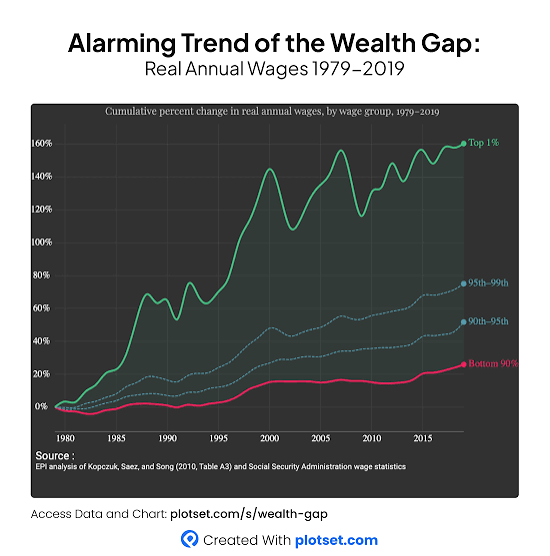
Global inequality has reached a crisis point, according to recent reports from the UN, Oxfam, and a G20-commissioned panel of experts. Key findings indicate that the gap between the ultra-wealthy and the rest of the world has dramatically widened, threatening economic security and democracy.
A recent G20 report has shed light on the alarming rise of global inequality, with the top 1% owning a staggering seven times more wealth than the bottom half of the world’s population.
In India, the situation is equally concerning, with the richest 1% increasing their share of national wealth by 62% between 2000 and 2023, now holding around 40% of the country’s wealth.
Key Statistics on Global Inequality
- Extreme Concentration of Wealth: The richest 1% of the world’s population controls approximately 45% of global wealth.
- Disproportionate Gains: Between 2000 and 2024, the top 1% captured 41% of all new wealth generated, while the poorest 50% of the world’s population received only 1%.
- Billionaire Boom: In 2024 alone, total billionaire wealth increased by $2 trillion, a rate three times faster than in 2023, creating an average of nearly four new billionaires per week.
- Stagnant Poverty Reduction: Global poverty reduction has virtually stalled since the pandemic, with 44% of the world’s population (over 2.8 billion people) still living on less than $6.85 a day.
- Inherited Wealth: Over 60% of billionaire wealth is derived from inheritance, cronyism, or monopoly power, suggesting much of this extreme wealth is unearned.
Impacts and Crisis Indicators
- Threat to Democracy: Countries with high levels of inequality are seven times more likely to experience democratic decline and social unrest.
- Health and Social Crises: 63 million people are pushed into poverty every year in India alone due to healthcare costs, highlighting how quality healthcare has become a luxury. Globally, many lack access to basic health services, with the average life expectancy in Africa over 15 years shorter than in Europe.
- Global South Exploitation: Through financial systems and debt repayments, an estimated $30 million per hour is transferred from the Global South to the Global North, perpetuating a form of modern-day “billionaire colonialism”.
- Economic Inefficiency: High inequality dampens overall economic growth by limiting consumption, hindering human capital development, and reducing trust in institutions.
Key Findings:
Global Wealth Disparity: The top 1% own 47.5% of global wealth, equivalent to $214 trillion.
India’s Wealth Concentration: The richest 1% hold 40% of India’s wealth, while the bottom 50% own just 3%.
Income Inequality: The richest 1% captured 41% of new wealth since 2000, while the poorest 50% saw only a 1% increase.
Call to Action: The report urges governments to establish an International Panel on Inequality to address the crisis.
Why This Matters:
– Inequality is a major obstacle to economic growth, social mobility, and democracy.
– The pandemic has exacerbated existing inequalities, with billionaires’ wealth increasing by $3.9 trillion in 2020.
– Climate change and technological advancements will only widen the gap if left unchecked.
What Can Be Done:
– Implement progressive taxation and wealth redistribution policies.
– Invest in education, healthcare, and social protection programs.
– Establish an International Panel on Inequality to monitor and address global inequality.
Team: Yuvamorcha.com
Follow us on LinkedIn:https://www.linkedin.com/company/intellexconsulting
https://www.linkedin.com/company/intellexcfo-com/
https://www.linkedin.com/company/venture-streets/
https://www.linkedin.com/company/growmoreloans-com/
https://www.linkedin.com/company/growmorfranchisees/
Websites:
www.IntellexCFO.com ,
www.StartupStreets.com,
www.GrowMoreLoans.com,
www.GrowMoreFranchisees.com,
www.CreditMoneyFinance.com