

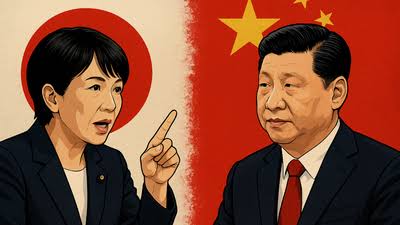
Sanae Takaichi vs Xi Jinping: Inside Japan–China Tensions Over Taiwan and the New Indo-Pacific Power
Sanae Takaichi vs Xi Jinping: Japan’s High-Stakes Clash With China Over Taiwan Explained
The geopolitical landscape of East Asia is shifting rapidly. At the center of this transformation is the escalating tension between Japan’s Prime Minister Sanae Takaichi and Chinese President Xi Jinping. Their recent exchange over Taiwan marks one of the most consequential diplomatic confrontations in the Indo-Pacific region in years.
Japan’s evolving stance on Taiwan, combined with China’s assertive expansion under Xi Jinping, is reshaping strategic calculations not just for the two countries, but for the entire world.
Background: A New Era of Japanese Leadership
When Sanae Takaichi addressed the Japanese Diet on November 7, she made an unusually direct statement. Any forced attempt to change the status of Taiwan would be considered a serious threat to Japan’s security.
This went far beyond traditional Japanese diplomatic language, signaling a profound shift toward a firmer, more proactive defense posture.
Takaichi, known for her conservative policies and strong support for Japan’s Self-Defense Forces has long argued that Japan must prepare for a dramatically more volatile Indo-Pacific region. Her stance places Japan squarely in alignment with Taiwan’s democratic government and its Western supporters, including the United States.
Why Taiwan Matters So Much to Japan
1. Geographical Proximity
Taiwan lies barely 110 km from Japan’s Yonaguni Island, making any conflict in the Taiwan Strait an immediate security risk.
2. Trade and Energy Routes
Japan’s survival depends on maritime supply chains that pass through waters near Taiwan. A Chinese blockade or conflict could devastate Japan’s economy.
3. Regional Balance of Power
China’s growing military presence threatens to shift the strategic balance in ways Japan considers unacceptable.
For these reasons, Takaichi’s declaration that Japan may respond to “collective self-defense” scenarios involving Taiwan marks a profound strategic shift.
Xi Jinping’s Sharp Reaction
China responded swiftly and sternly.
Xi Jinping’s government accused Japan of:
Interfering in China’s internal affairs
Provoking regional instability
Reviving militarism under the pretext of self-defense
Beijing reiterated its long-held claim that Taiwan is an inseparable part of China and warned Tokyo against “crossing red lines.”
The confrontation, while verbal for now has raised concerns across diplomatic circles due to how central Taiwan is to China’s national identity narrative under Xi Jinping.
A Growing Military Dimension
Japan’s concerns are backed by hard data:
China now possesses the world’s largest navy by number of ships.
Chinese aircraft frequently breach Japan’s Air Defense Identification Zone (ADIZ).
The People’s Liberation Army conducts regular drills simulating a Taiwan invasion.
In response, Japan has announced:
A plan to double defense spending to about 2% of GDP
Acquisition of counter-strike capabilities, including long-range missiles
Strengthening alliances with the U.S, Australia, India, and Europe
Takaichi’s government has made clear that Japan will no longer remain passive in the face of rising threats.
The U.S. Factor: A Strategic Triangle
The United States views Japan as a critical partner in preventing unilateral changes to Taiwan’s status. Washington has praised Tokyo’s tougher stance, and the two countries are expanding:
Joint military exercises
Intelligence sharing
Maritime patrols
This growing U.S.–Japan alignment represents a major challenge for Beijing, which fears an encirclement strategy in the Western Pacific.
Economic Stakes: More Than Military Tensions
Japan and China are major trading partners, but their economic relationship is becoming increasingly fragile due to:
Supply chain diversification away from China
Technology restrictions led by the U.S.
Rising nationalism in both countries
A Taiwan conflict could disrupt global technology markets, semiconductor supply, and critical mineral routes making this showdown a global economic concern, not just an Asian one.
How Taiwan Views Japan’s New Position
Taiwanese leaders have welcomed Japan’s stronger support.
With Taiwan facing the highest military pressures in decades, Japan’s commitment adds legitimacy and deterrence against Chinese aggression.
Public sentiment in Taiwan toward Japan is overwhelmingly positive and growing.
What Comes Next? Future Scenarios
1. Diplomatic Confrontation Intensifies
Expect more verbal exchanges, diplomatic protests, and strategic signaling.
2. Military Posturing Increases
Japan and China may increase air and naval deployments near Taiwan and the East China Sea.
3. Taiwan Becomes the Center of Global Politics
As both sides harden their positions, global powers may be forced to take clearer stances.
4. Economic “Decoupling Lite”
Japan may gradually reduce reliance on Chinese manufacturing and technology.
Conclusion: A Defining Moment for the Indo-Pacific
The confrontation between Sanae Takaichi and Xi Jinping symbolizes a monumental shift in Asian geopolitics. Japan is no longer adopting a cautious stance. It is positioning itself as a central defender of democratic values and regional stability.
As China pushes harder to assert its influence, Japan’s renewed confidence will play a crucial role in shaping the future of the Indo-Pacific. The world is now watching closely, because what happens next may determine the trajectory of global peace and security in the coming decade

Can you be more specific about the content of your article? After reading it, I still have some doubts. Hope you can help me.