

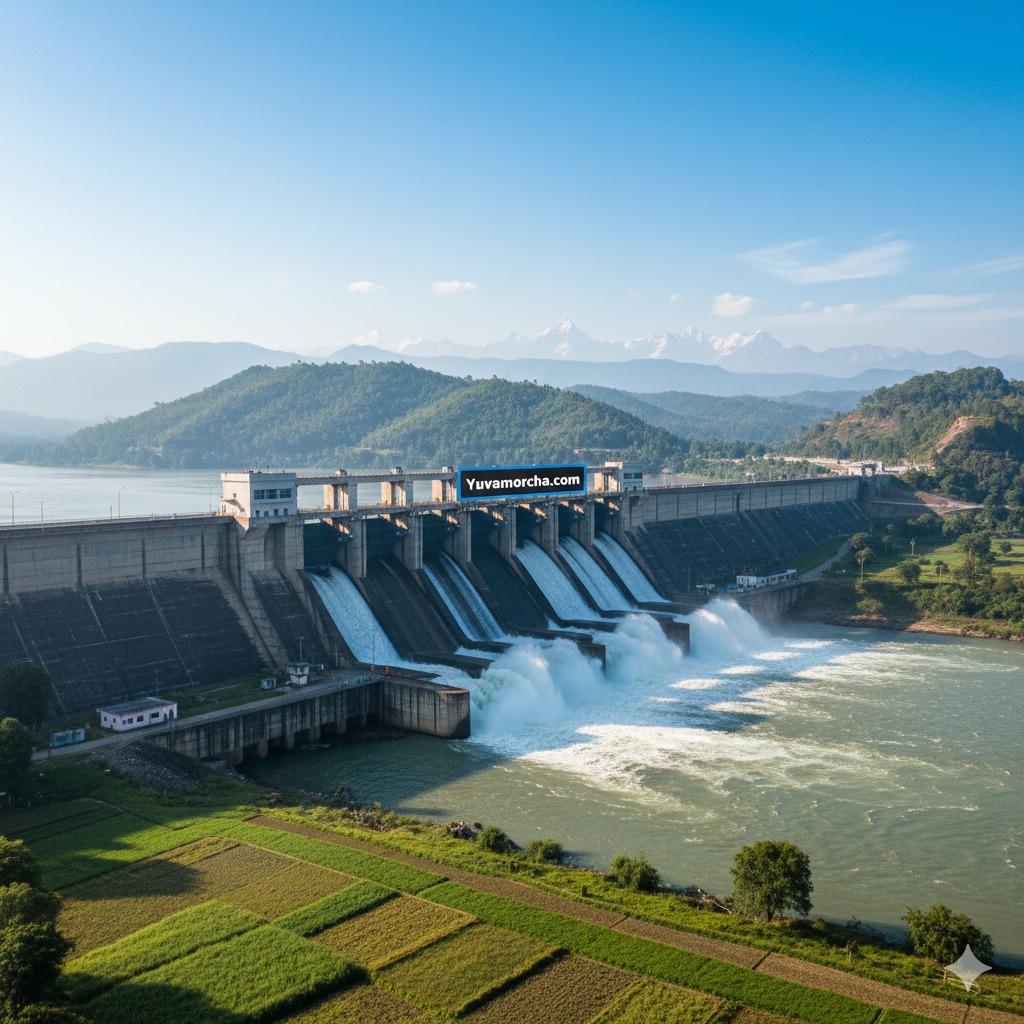
India Halts Water Flow of Ravi River to Pakistan: Understanding the Shahpur Kandi Project.
India Stops Ravi River Water Flow to Pakistan: Impact and Details of the Shahpur Kandi Project.
India has officially halted the flow of the Ravi River into Pakistan by completing the Shahpur Kandi barrage. This move, within the framework of the Indus Waters Treaty, aims to provide much-needed irrigation and power to the Jammu and Kashmir and Punjab regions. Learn about the project’s significance and its impact on regional water dynamics.
India Completes Shahpur Kandi Barrage, Utilizing Its Full Share of Ravi River Waters
In a significant move concerning regional water management and the long-standing Indus Waters Treaty (IWT), India has effectively stopped the flow of the Ravi River into Pakistan. This was achieved through the completion of the Shahpur Kandi barrage, located on the border of Punjab and Jammu and Kashmir.
The move marks a major milestone in India’s efforts to fully utilize its allotted water rights under the 1960 treaty.
Background: The Indus Waters Treaty
Signed in 1960 and mediated by the World Bank, the Indus Waters Treaty governs the distribution of the Indus River system’s waters between India and Pakistan. Under the treaty:
- India has exclusive rights over the waters of the three “Eastern Rivers”: the Ravi, Beas, and Sutlej.
- Pakistan has rights over the waters of the three “Western Rivers”: the Indus, Jhelum, and Chenab, with certain exceptions for India (such as non-consumptive use and limited irrigation).
For decades, a portion of India’s allotted water from the Ravi River continued to flow into Pakistan due to a lack of complete infrastructure to harness it. The Shahpur Kandi project was designed specifically to address this.
The Shahpur Kandi Project: A Decades-Long Endeavor
The Shahpur Kandi Dam project, situated downstream from the massive Ranjit Sagar Dam, has faced numerous delays since its inception in 1995. Disputes between the state governments of Punjab and Jammu and Kashmir halted construction for several years.
Work resumed in earnest in 2018 after an agreement was reached between the two states, facilitated by the central government. The project’s completion is a strategic victory for India’s water management policy.
Key Benefits and Impact
The primary objective of the Shahpur Kandi barrage is to divert water that previously flowed into Pakistan to benefit Indian farmers and residents. Key impacts include:
- Irrigation for Jammu and Kashmir: Approximately 32,000 hectares of land in the Kathua and Samba districts of Jammu and Kashmir will now receive much-needed irrigation. These areas have historically struggled with water scarcity and drought-like conditions.
- Support for Punjab: The project will also stabilize and improve the irrigation system for over 5,000 hectares of land in Punjab.
- Hydroelectric Power Generation: The project includes a powerhouse with a capacity of approximately 206 MW, contributing to the region’s renewable energy goals.
- Full Treaty Compliance: By utilizing the Ravi’s waters, India is operating within the legal framework of the Indus Waters Treaty. The water being diverted is part of India’s sovereign entitlement.
Regional Implications
The stoppage of water flow has drawn attention in Pakistan, which is already grappling with severe water stress. While India is acting within its treaty rights, the move underscores the sensitive nature of water diplomacy in South Asia.
For India, the project is a crucial step toward achieving water security in its northern states. By diverting “excess water” that was previously unutilized, the government aims to transform the agricultural landscape of the Kandi region, fulfilling a long-standing promise to local communities.
As the Shahpur Kandi project becomes fully operational, it serves as a testament to India’s commitment to maximizing its natural resources for domestic development while navigating the complexities of international water sharing agreements.
Team: YuvaMorcha.com
More Featured Articles:
SME IPOs in India: Insights from Regulators, Bankers & Advisors
Top 10 Angel Investment Networks in India (2026): The Ultimate Founder’s Guide to Fundraising.
The Ultimate Guide to Collateral-Free Business Finance: Scaling Beyond Physical Assets.




No-cost bot for Telegram to generate presents, premium subs. Amazing grow your channels!
Netxmix presents our users the all-in-one TG bot:
First of all Generate freebies
Now you’re able to generate custom gift, including exclusive access, data, pictures, video content, images, promo vouchers, special coupons, discounts, special codes, etc., with your own rule to get this freebie. Specifically, the condition to get freebie will be a subscription the TG channels you chose during making + a certain number of clicks via your referral link in the bot.
You can access a no-cost option for creating gifts; though, to use it, it’s required to add some TG channels among your subscriptions.
Just go to Netxmix bot https://t.me/netxmixbot click “start” and click “create a free gift”.
Next Set up premium access for channels and groups
Now you’re able to create paid memberships in your TG channels and groups via this bot. Transactions will be handled automatically in crypto.
To create premium access, simply go to Netxmix bot t.me/netxmixbot press “Start” – profile then your channels – add channel.
In our bot it’s possible to find a large number presents that members have already created, any of which you’re able to claim absolutely free.
Please click “Free Gifts” option inside the bot.
Join us – t.me/netxmixbot
Free new over 10B AI, streaming, Google accounts, cloud storage, gaming, Game, VPN, community, TG, storage, and more DBs at telegram bot.
For got DBs please click direct link or type /start to bot, choose GIFTS from menu, choose section databases, NET-Archives, ncloud-archives then click to database.
Over 260 million updated data in crypto users:
@netxmixbot?start=gift_1
10+ billions ULP fresh DB in financial, media, app users:
t.me/netxmixbot?start=gift_4
Many other databases in our bot, just follow to bot to got fresh databases each day:
t.me/netxmixbot