“Ready for War”: Taliban Warns Pakistan After Istanbul Talks Collapse
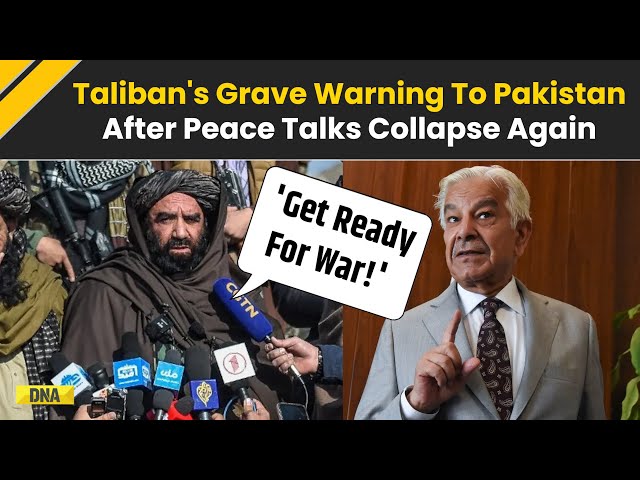
The recently collapsed peace negotiations between Islamic Emirate of Afghanistan (IEA) and Pakistan have escalated tensions significantly as the Afghan side issues a sharp warning to Islamabad following failure of the Istanbul round of talks.
In a strong statement, the IEA accuses Pakistan of obstructing progress in mediated peace talks and acting irresponsibly, despite the involvement of Turkey and Qatar as facilitators. Meanwhile, Pakistan has confirmed that no fourth round of negotiations is yet planned, raising the risk of further escalation along the Afghanistan-Pakistan border.
The Breakdown of Talks:
The talks held in Istanbul on 6–7 November were attended by Afghan representatives who reportedly came “in good faith and with appropriate authority”. They expected Pakistan to engage constructively. Instead, the Afghan statement criticised Pakistan for repeatedly adopting an “irresponsible and non-cooperative attitude”, refusing to assume responsibility for border security, and trying to shift Pakistan’s own obligations onto Kabul.
Pakistan, for its part, has publicly acknowledged the impasse: its Defence Minister confirmed there are no immediate plans for a fourth round of talks.
Afghan Warning & Sovereignty Assertion:
In its statement, the IEA reaffirmed that Afghanistan will not permit any country to use its territory for action against another nation nor will it allow its soil to be used by a third party to undermine Afghanistan’s sovereignty. It warned Pakistan not to “test the patience of Afghans”.
Spokesman Zabihullah Mujahid underscored that the defence of the Afghan people and land is both an Islamic and national duty, signalling the IEA’s readiness to act should their territorial integrity be challenged.
Pakistan’s Position & Border Tensions
Pakistan’s stance is that the Afghan authorities have failed to curb militant groups using Afghan soil in particular the Tehrik‑e Taliban Pakistan (TTP) to launch cross-border attacks. Pakistan claims that dialogue failed because Afghanistan rejected Islamabad’s demands, which Islamabad terms reasonable.
Cross-border clashes between the two neighbours, including deaths of civilians and soldiers, have further strained relations.
What’s at Stake:
Regional security risk: The collapse of talks increases the possibility of renewed border fighting and instability in South-Central Asia.
Sovereignty issues: Afghanistan’s statement frames its sovereignty as non-negotiable, raising the stakes in any future military or diplomatic engagement.
Diplomatic mediation: The roles of Turkey and Qatar as mediators remain significant their ability to bring parties back to the table will be challenged.
Militant safe-havens: Pakistan’s concerns about militant groups based in Afghanistan remain a major flashpoint; Afghanistan contests that it has full control over such groups.
Cease-fire fragility: Although a cease-fire brokered earlier remains technically in place, both sides admit the situation remains precarious.
Future Outlook:
Unless fresh diplomatic momentum is generated, the stalemate may deepen. Afghanistan appears willing to hold its ground over sovereignty, while Pakistan insists on pegging future talks to actionable commitments from Kabul especially regarding militant activity. The mediators (Turkey and Qatar) may need to recalibrate their approach to bridge the gap.
For now, despite the war-threat language, neither side seems eager to trigger large-scale conflict. Yet the rhetoric marks a sharp departure from recent restraint, signalling that both Kabul and Islamabad are gearing for a more confrontational posture if diplomacy fails.
Team: Yuvamorcha.com