

Pakistan Raises Concerns Over Growing India–Israel Strategic Alliance After PM Modi’s Jerusalem Outreach.
Pakistan’s parliament expresses concern over strengthening India–Israel ties following Prime Minister Narendra Modi’s outreach in Jerusalem.
A detailed analysis of regional security, defence cooperation, and geopolitical implications for South Asia and the Middle East.
Pakistan Opposes Strengthening India–Israel Alliance: Regional Implications and Strategic Analysis.
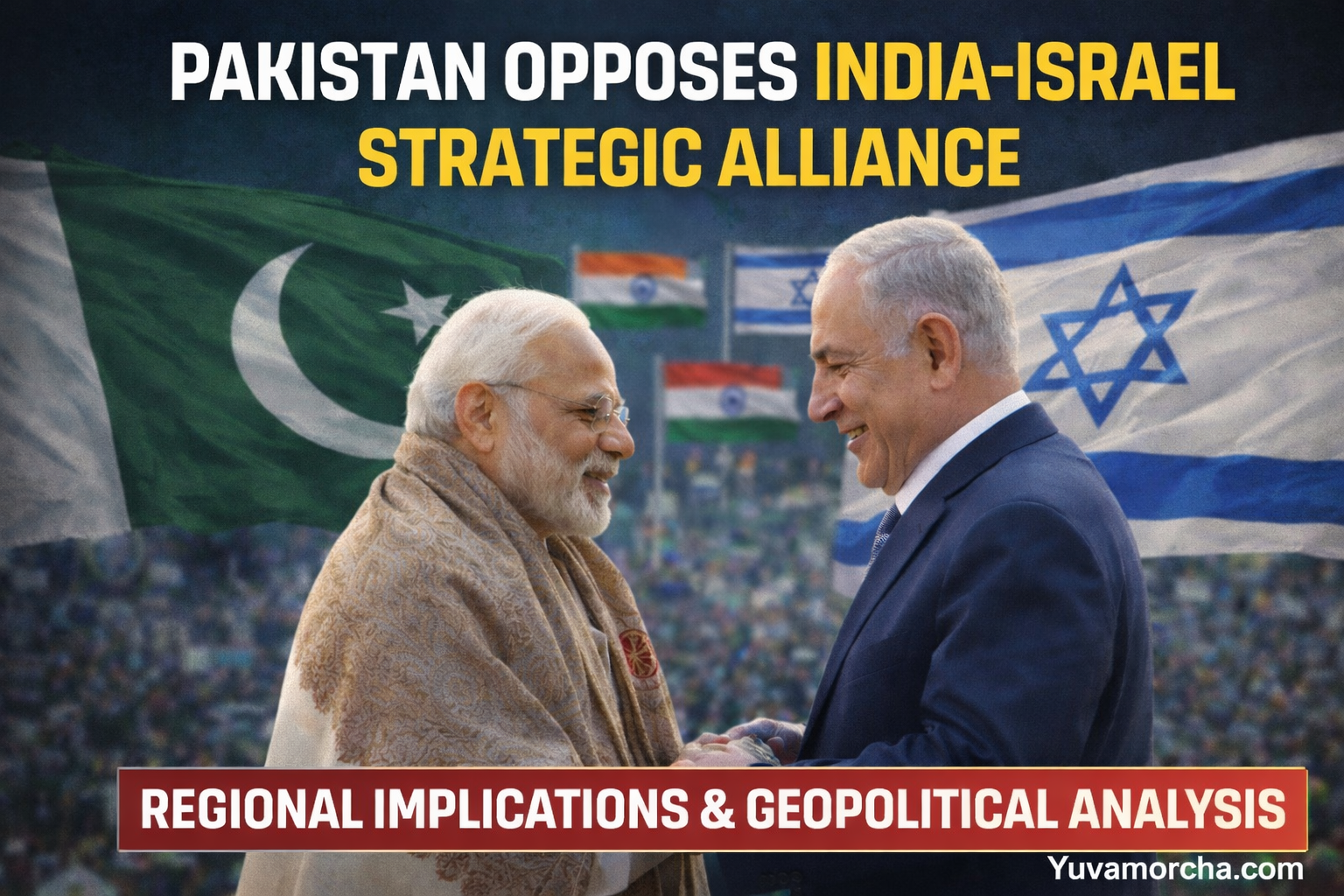
The evolving strategic partnership between India and Israel has once again drawn a sharp response from Pakistan. Following recent high-level diplomatic engagement between New Delhi and Jerusalem, Pakistan’s parliament reportedly passed a resolution expressing concern over the deepening India–Israel alliance, describing it as a potential threat to regional stability.
The development highlights the broader geopolitical shifts unfolding across South Asia and the Middle East — two regions increasingly interconnected through defence cooperation, technology partnerships, and strategic diplomacy.
Background: India–Israel Relations in Focus
Relations between India and Israel have strengthened significantly over the past decade. Since establishing full diplomatic relations in 1992, both nations have gradually expanded cooperation across defence, agriculture, cybersecurity, water management, and innovation.
The relationship gained renewed attention following Prime Minister Narendra Modi’s high-profile visit to Jerusalem, where he addressed Israel’s parliament, the Knesset, and discussed expanding defence and strategic cooperation.
On the Israeli side, leadership under Prime Minister Benjamin Netanyahu has consistently emphasized closer ties with India as part of Israel’s broader Asia outreach strategy.
Pakistan’s Parliamentary Resolution.
Pakistan’s parliament reportedly passed a resolution voicing “strong concerns” over what it described as a growing strategic axis between India and Israel. Pakistani officials argue that deeper defence and intelligence collaboration between the two nations could alter the regional balance of power.
The concerns articulated include:
Expansion of defence procurement and technology sharing,
Intelligence cooperation,
Joint military exercises,
Enhanced counter-terrorism collaboration,
Islamabad’s position suggests that such developments may heighten security anxieties in South Asia, particularly given the long-standing tensions between India and Pakistan.
However, analysts remain divided. Some believe the resolution is primarily symbolic, aimed at domestic audiences. Others argue it reflects genuine apprehension over shifting strategic alignments.
India–Israel Defence Cooperation: A Strategic Pillar.
Defence cooperation remains the cornerstone of India–Israel relations.
Israel has emerged as one of India’s key defence suppliers, particularly in:
Missile defence systems,
Unmanned aerial vehicles (UAVs),
Surveillance technologies,
Cybersecurity infrastructure,
India’s diversification of defence procurement including partnerships with Israel is part of its broader national security strategy to modernize armed forces and reduce overdependence on any single supplier.
From New Delhi’s perspective, cooperation with Israel is pragmatic rather than ideological, centered on national interest, technology acquisition, and counter-terrorism capability enhancement.
Geopolitical Dimensions: South Asia Meets the Middle East.
The reaction from Pakistan underscores how Middle Eastern diplomacy increasingly intersects with South Asian geopolitics.
Three broader trends are shaping this dynamic:
1. Strategic Realignments: Countries are recalibrating alliances based on economic and security interests rather than traditional ideological blocs.
2. Counter-Terrorism Cooperation: India and Israel share concerns about terrorism and border security, creating natural areas for collaboration.
3. Defence Modernization: Rapid technological change in warfare has driven nations to seek advanced surveillance, missile defence, and AI-enabled systems.
For Pakistan, any perceived military advantage gained by India through Israeli technology is viewed through the lens of longstanding bilateral tensions.
Domestic Politics and Strategic Signaling.
Political observers suggest that parliamentary resolutions in such contexts often serve multiple purposes:
Signaling diplomatic displeasure,
Addressing domestic political constituencies,
Reinforcing foreign policy narratives,
Managing internal crises through external focus
In this case, some analysts argue that raising concerns about India–Israel ties may also function as a domestic political strategy within Pakistan.
Regional Stability: Threat or Transformation?
The central debate revolves around whether India–Israel cooperation destabilizes the region or reflects a broader transformation in international relations.
Arguments suggesting instability include:
Escalation of defence competition,
Heightened mistrust among neighboring states,
Strategic polarization,
Arguments suggesting normalization include:
Sovereign right to bilateral partnerships,
Routine global defence collaboration,
Expansion of economic and technological ties beyond military cooperation.
Ultimately, the regional impact will depend less on symbolic parliamentary resolutions and more on practical policy decisions, diplomatic engagement, and confidence-building measures among South Asian neighbors.
The Way Forward:
As global geopolitics becomes increasingly multipolar, strategic partnerships are evolving beyond traditional alignments. India’s foreign policy emphasizes multi-alignment — maintaining relations across diverse global actors, including the United States, Israel, Russia, and Middle Eastern nations.
For Pakistan, recalibrating diplomatic engagement mechanisms and strengthening regional dialogue platforms may offer more constructive outcomes than rhetorical opposition.
Dialogue, transparency, and economic cooperation remain the most reliable tools for ensuring long-term regional stability.
Conclusion:
Pakistan’s parliamentary opposition to strengthening India–Israel ties reflects deeper strategic anxieties in a rapidly shifting geopolitical landscape. While Islamabad voices concerns about regional security, New Delhi frames its engagement with Israel as a sovereign and strategic choice grounded in national interest.
The coming years will reveal whether this triangular dynamic intensifies rivalry or encourages more structured diplomatic engagement across South Asia and the Middle East.
In an era defined by strategic realignment, alliances are increasingly shaped by technology, security cooperation, and economic pragmatism and the India–Israel partnership stands as a significant example of this evolving global order.
Team: Yuvamorcha.com
More Featured Articles:
SME IPOs in India: Insights from Regulators, Bankers & Advisors
India Stops Ravi River Water Flow to Pakistan: Impact and Details of the Shahpur Kandi Project.
How Ex-Bankers Can Build a High-Income Second Career Through a Corporate DSA Partner Program
The Ultimate Guide to Collateral-Free Business Finance: Scaling Beyond Physical Assets.
Join Us as Loan Agents / Sub-DSA Partners – PAN India Opportunity
The Mother of All Deals: Decoding the Historic India-Europe Free Trade Agreement of 2026.