




Sharing is caring!
Dynastic Politics: A Growing Threat to Indian Democracy and Tharoor’s Wake-Up Call
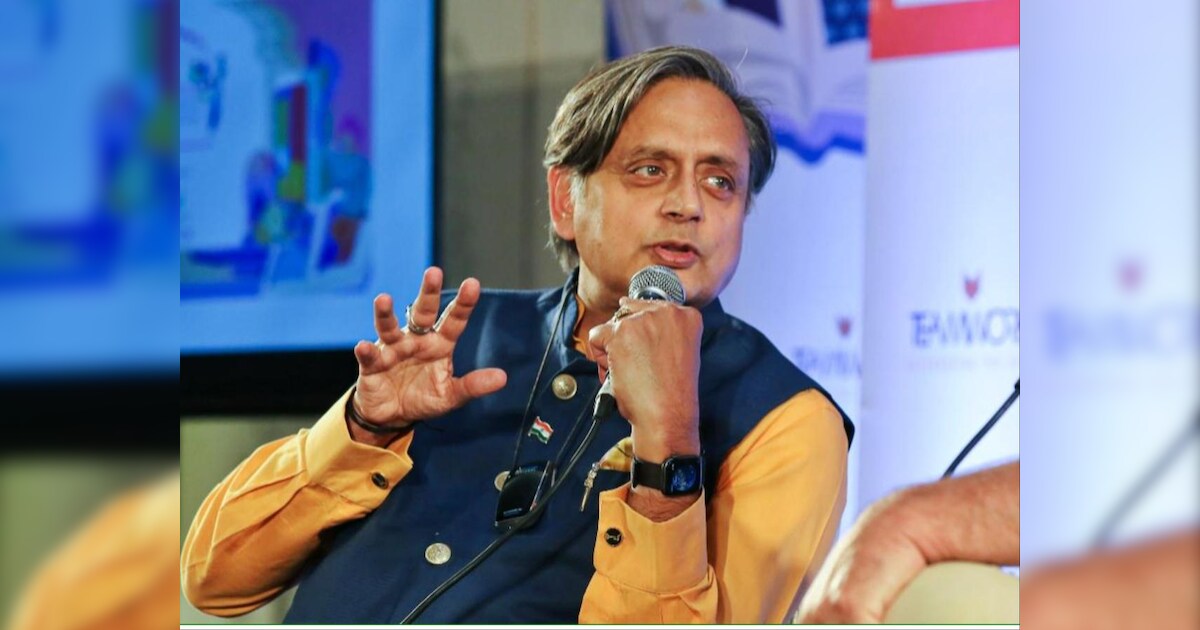
In a widely read column published this week, Congress MP and writer Shashi Tharoor warned that “Indian politics have become a family business” and argued that dynastic succession across parties poses a “grave threat” to Indian democracy.
His piece which calls for trading “dynasty for meritocracy” and for structural party reforms has reignited an old national debate about nepotism, internal party democracy and the quality of political leadership.
What Tharoor said about Dynastic Politics:
Writing for Project Syndicate in an essay titled “Indian Politics Are a Family Business”, Tharoor traces how the assumption that political leadership can be a birthright has spread from many of India’s best-known dynasties to every level of governance from panchayats to Parliament. He warns that when power is inherited rather than earned, the quality of governance suffers and the democratic promise of choice and competition is undermined. He argues it is “high time India traded dynasty for meritocracy” and urges reforms such as legally mandated term limits and meaningful internal party elections.
“Indian politics have become a family business.”
Dynastic rule is a “grave threat” to Indian democracy and must be replaced by merit-based selection.
Why this matters — the democratic consequences
1. Narrowing the leadership pool. When party tickets and leadership roles are concentrated within families, parties draw from a smaller set of potential leaders. Tharoor says that “drawing from a smaller talent pool is never advantageous,” because it privileges surname over competence and local engagement with predictable costs for policy design and implementation.
2. Opacity in internal party democracy. Tharoor highlights how many Indian parties remain personality-driven and make leadership decisions through small cliques or single individuals, not transparent internal ballots. That opacity reduces accountability and encourages patronage politics rather than programmatic competition.
3. Legitimacy and voter choice. Democracies depend on voters believing that office is open to anyone with ability and popular backing. If offices are perceived as hereditary, citizens’ faith in representative government and incentives for civic participation are weakened a central worry in Tharoor’s analysis.
4. Policy and governance impact. Empirical work from other democracies shows that dynastic politics often correlates with weaker governance and greater corruption risks; Tharoor warns India risks similar outcomes if lineage trumps merit across the political spectrum. (Tharoor cites examples spanning national and regional parties to illustrate the point.)
Not just one party, a cross-spectrum phenomenon
Tharoor does not confine his critique to a single family or party. While he explicitly notes how the Nehru-Gandhi legacy helped “cement the idea that political leadership can be a birthright,” he emphasizes that dynastic succession is prevalent across parties and regions from established national houses to regional families in Punjab, Telangana, Tamil Nadu and elsewhere. In short: this is an institutional problem, not merely a partisan talking point.
Reactions — politics as usual
The column immediately produced predictable ripples. The BJP and its spokespeople seized on Tharoor’s critique of dynastic practices to attack the Congress leadership, while sections within the Congress responded with unease, seeing the piece as an internal critique aired in a public forum. Media outlets and political commentators framed the debate as both a principled argument over party reform and a tactical blow that could intensify intra-party tensions.
Tharoor proposes a combination of legal, party-level and civic measures:
Legally mandated term limits for party office-bearers (to prevent long entrenchments).
Meaningful, binding internal party elections with transparent processes and external audit or oversight mechanisms.
Voter education and civil-society pressure so electorates prioritise competence and track record over pedigree.
Practical critics point out the political difficulty of legislating internal party rules: parties jealously guard organizational autonomy, and any state intervention would be politically contested and legally fraught. That said, incremental reforms — public disclosure of candidate selection criteria, incentive structures for local talent development, and stronger primaries inside parties could be politically feasible starting points.
Two counterarguments and Tharoor’s reply
1. Dynasty as political brand: Supporters of political heirs argue that family names can be a shorthand for values, continuity or political legacy that voters prefer. Tharoor counters that a legacy does not equal competence, and that democratic legitimacy should come from voters’ free choice, not inherited advantage.
2. Voter agency: Some argue voters knowingly elect dynasts; therefore the practice is legitimate. Tharoor accepts voter agency but warns that structural pressures incumbency advantages, party machine control of nominations and media resources — skew the field and limit genuine choice. Hence, fairer nomination processes matter.
International perspective: India in comparative light
Political dynasties are not uniquely Indian — they appear in democracies from the Philippines to parts of Latin America and Africa. Comparative studies suggest democracies where party nominations are closed and clientelistic networks dominate are more likely to produce dynastic patterns and suffer governance deficits. Tharoor’s intervention asks India to look comparatively and consider institutional changes that have reduced dynastic capture elsewhere (stronger primaries, public financing rules, transparency in candidate selection).
Conclusion — a provocation that deserves sustained debate
Whether one agrees with every line of Tharoor’s column or not, his central provocation is worth taking seriously: a functioning democracy depends on open, competitive channels for leadership, not the inheritance of office. His call to “trade dynasty for meritocracy” is an invitation to rethink how parties recruit, promote and renew leaders.
It’s also a political challenge because real reform will require parties to change rules that currently benefit entrenched interests. If India wants to keep improving governance and deepening democratic practice, that hard conversation is unavoidable.
Team: Yuvamorcha.com




I don’t think the title of your article matches the content lol. Just kidding, mainly because I had some doubts after reading the article.
Just tried out using bw7777. Not bad at all! It does what it says on the tin. Check it out here now: bw7777