


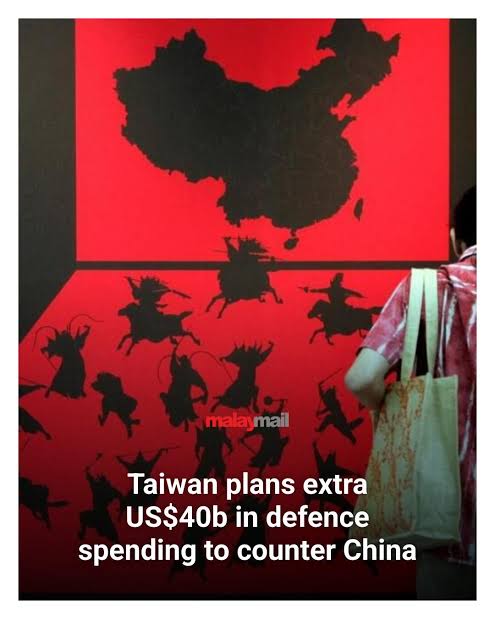


Taiwan’s Bold $40 Billion Defense Plan: Why “T-Dome” Matters for Regional Security
Taipei — On 26 November 2025, Lai Ching‑te unveiled a landmark defense initiative of US$40 billion, earmarked to strengthen Taiwan’s military capabilities over the next eight years. It is a clear signal that the island will no longer rely solely on diplomacy or deterrence by ambiguity, but embrace robust, technology-driven self-defense.
Dubbed T‑Dome, this proposed multi-layered air and missile defense network aims to shield Taiwan from a spectrum of threats from aircraft and drones to cruise missiles and ballistic missiles.
The plan covers purchases of advanced weapons including from the United States Department of Defense, integration of AI-enabled detection and interception systems, and a radical upgrade to Taiwan’s deterrence posture.
Why Taiwan Is Doing This Now.
Escalating Threats from Beijing
In recent years, Taipei has witnessed a steady increase in aggressive maneuvers from Beijing: frequent incursions into Taiwan’s Air Defense Identification Zone (ADIZ), warplane sorties, naval deployments, drone overflights , all paired with gray-zone tactics, psychological operations, and disinformation campaigns.
Many analysts warn that the window for forcible unification is narrowing with some projecting a possible PLA operation between 2027 and 2030.
In this context, T-Dome is not merely defensive hardware: it is a deterrent, a statement that Taiwan is prepared to make any aggression costly. Lai himself framed the decision not in terms of China–Taiwan politics, but as a defense of “democratic Taiwan” against coercion.
Asymmetric Advantage Through Technology
Rather than try to match China’s conventional large-scale force, Taiwan is investing in asymmetric defense combining precision missiles, anti-air / anti-missile defenses, drones, and advanced early-warning systems.
The T-Dome concept resembles Israel’s famed Iron Dome: a flexible, layered shield that can defend critical assets and civilian population, even under saturation attack.
Moreover, defense officials said that T-Dome will integrate existing assets such as the Patriot missile batteries with new medium- and long-range interceptors, radars, and anti-ballistic systems, all managed under a unified command-and-control network. AI-powered battlefield decision support is expected to offer rapid, real-time threat assessment and interception orders.
What the $40 Billion Will Fund
According to the official defense draft, over the period 2026–2033, funds will be allocated to:
Procurement of advanced surface-to-air and anti-ballistic missiles complementing Taiwan’s existing Patriot and Tien Kung batteries.
Enhanced early-warning radars, long-range detection systems, and expanded missile-defense coverage from low to high altitude.
Unmanned systems (drones) and precision-strike munitions to enable asymmetric defense, rapid response, and flexible strike options against amphibious or airborne threats.
An AI-driven battle-management system , to create a “common operational picture” allowing integration of domestically-produced and imported systems, delivering real-time threat analysis, decision support, and automated interception directives.
Domestic defense-industrial capacity building the government estimates the plan could generate NT$400 billion in production value and create about 90,000 jobs, boosting resilience and reducing reliance on foreign supply chains.
The long-term ambition: bring defense spending to 3.3% of GDP in 2026, with a target of 5% by 2030 levels unprecedented in peacetime for Taiwan.
Unshakable Alliance: US Reaffirms Support for Japan Amid China’s Taiwan Flashpoint
International Reactions , Support & Warnings
The plan has drawn largely favorable responses from Taiwan’s democratic partners. The de facto U.S. representative in Taipei congratulated the move, emphasizing that Taiwan’s acquisition of “critical asymmetric capabilities” helps stabilize peace in the Indo-Pacific.
For many in the region, Taiwan’s strengthened defenses serve to raise the cost both strategic and political of any possible aggression by Beijing, while reinforcing Taiwan’s role as a key pillar in regional security.
Nevertheless , not surprisingly ,Beijing denounced the plan. The Taiwan Affairs Office accused Taipei of succumbing to foreign influence and pouring money into provocations. Critics argue the budget could strain Taiwan’s finances and divert funds from social services.
But from the perspective of many Taiwanese and defenders of democracy worldwide, the decision is less about confrontation and more about preservation of self-determination, democratic values, and the peaceful status quo.
Why “T-Dome” Matters — Not Just for Taiwan, But the Region
Protecting the “First Island Chain” & Regional Stability
Taiwan sits at the core of what strategists call the “first island chain” a chain of territories stretching from Japan’s Ryukyu Islands through Taiwan, the Philippines, and down toward Indonesia.
By investing in strong defensive capabilities, Taiwan is also contributing to regional deterrence: a well-defended Taiwan makes potential aggression riskier not just for Taiwan, but for broader regional stability.
Deterring Escalation and Avoiding Conflict
Rather than inviting conflict, a credible deterrent like T-Dome helps prevent it. When aggressors know they could face serious consequences sophisticated missile interception, early-warning systems, asymmetric counter-strikes they are more likely to opt for diplomacy over force.
In a volatile geopolitical environment with increasing military activity, gray-zone operations, and disinformation campaigns strategic restraint backed by capability can preserve peace.
Democracies vs. Coercion: Choosing Will Over Intimidation
The T-Dome plan is not about provoking war. As President Lai emphasized, it is about defending democracy, freedom, and Taiwan’s right to self-determination.
For many across Taiwan and beyond, the choice is not between confrontation and appeasement but between dignity and submission. By investing in their own defense, Taipei is refusing to leave its future to the whims of a distant superpower.
Challenges & Criticisms And Why They Shouldn’t Deter Taipei
Some critics both domestic and foreign raise valid questions:
Financial burden:
A $40 billion plan is hefty. Critics worry about diverting resources from welfare, education, or economic development.
Escalation risk:
China could view this as provocative, leading to increased pressure or retaliation.
Political divisions:
The opposition Kuomintang (KMT) controlling Taiwan’s legislature may resist approval, citing fiscal prudence or fear of escalation.
Yet these concerns, while real, must be weighed against what’s at stake:
Self-defense is not aggression:
Building defenses especially a system like T-Dome is a reactive, not offensive, measure. It does not threaten others; it protects Taiwan’s sovereignty.
Deterrence can prevent war: Weakness or indecision may invite coercion. A credible defensive posture especially against missile and air threats reduces the likelihood of an attack, preserving peace.
Long-term stability over short-term savings: The cost of conflict human, economic, global would dwarf the expense of defense. Taiwan’s semiconductor industry, global trade routes, and regional stability all hang in the balance.
Japan To Shift Legacy Semiconductor, LCD And Battery Production To India To Reduce China Dependence:
What Comes Next And How the World Should Respond
For Taiwan
Secure legislative approval of the $40 billion package. Given the gravity of the security environment, bipartisan support would send a powerful signal to Beijing and the world.
Begin procurement and deployment from missiles and radars to AI-enabled command systems while investing in domestic defense-industry capacity.
Launch public outreach to explain the necessity of T-Dome and reassure citizens that this is about protection, not militarization.
For Partners & Allies
Continue to support Taiwan’s right to self-defense. Democracies worldwide should recognize that Taiwan’s enhanced defense strengthens regional stability.
Encourage transparency and defensive not offensive postures. Support through joint training, defense sales, and technology transfer, but emphasize restraint and deterrence over aggression.
Foster multilateral security dialogues in the Indo-Pacific to reduce risks of miscalculation and promote peaceful conflict resolution.
Conclusion: Taiwan’s Future Built on Resolve, Not Reluctance
The $40 billion defense budget and the T-Dome project represent more than military hardware. They represent a profound choice by Taiwan to safeguard democracy, to defend its people, and to stand firm against coercion.
In a world fraught with uncertainty, Taiwan’s decision is an act of responsibility: to itself, its region, and the global order that respects self-determination, sovereignty, and peaceful coexistence.
As the world watches what comes next, one thing is clear: a secure, confident Taiwan willing and able to defend itself is not a provocation. It is a cause worth supporting.





Your article helped me a lot, is there any more related content? Thanks!