


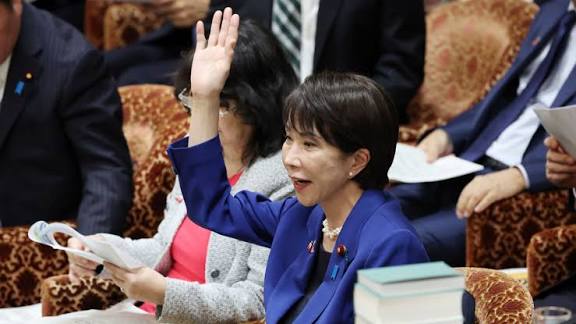


Japan Signals Major Shift: PM Sanae Takaichi Warns Taiwan Attack Could Trigger Tokyo’s Self-Defence Forces — Sparks Diplomatic Firestorm with China.
Tokyo’s Stark Warning and Beijing’s Blowback
Japan’s new prime minister, Sanae Takaichi, stirred significant regional tension when she told the Japanese parliament that a military strike by China on Taiwan could amount to an “existential” or “survival-threatening situation” for Japan, thereby opening the door to Japan’s armed response under collective self-defence laws.
In response, China’s consul-general in Osaka, Xue Jian, posted a sharply worded social-media message referencing Takaichi’s remarks and stating: “We have no choice but cut off that dirty neck that has lunged at us without hesitation. Are you ready?”
Tokyo officially protested the remarks, calling them “extremely inappropriate” and lodging a formal complaint with Beijing.
What Takaichi Said …. And Why It’s a Departure
In a parliamentary session, Takaichi described scenarios like a Chinese naval blockade of Taiwan or the use of force to prevent U.S. reinforcements from intervening. She argued such a scenario could be classed as a “situation threatening Japan’s survival” — a legal threshold under Japan’s 2015 security legislation that would permit the mobilization of the country’s Self-Defence Forces.
Earlier Japanese governments have been deliberately vague about how far Japan would go in a Taiwan contingency; Takaichi’s statement marks one of the most explicit endorsements of possible military support to Taiwan by Tokyo.
China’s Reaction: From Warning to Threat
Beijing swiftly condemned the statement. China’s Foreign Ministry criticized it as interference in China’s internal affairs and warned that Japan risked destabilising regional order.
The diplomatic row deepened when Xue’s social-media post escalated to a direct threat, provoking outrage not only in Japan but also drawing comment from the U.S. Ambassador to Japan, who described the comment as a threat to the Japanese people.
Implications for Regional Security and Japan-China Ties:
Japan’s security posture is shifting. Takaichi’s remarks align with her broader push to modernise Japan’s defence strategy, including speeding up its defence-spending target and bolstering alliances.
Taiwan contingency is no longer theoretical. By treating a China-Taiwan flare-up as a potential survival threat, Japan signals readiness to act which raises stakes in the Taiwan Strait.
Japan-China relations enter a rocky phase. Coming just after Takaichi’s recent summit with China’s leader, the incident suggests that stabilising relations may become more challenging.
Regional ripple-effects. For other Indo-Pacific players, the Japanese shift could push regional security calculations toward more open contingency planning and defence cooperation.
What’s Next — Watch These Three Key Variables
1. Japan’s formal policy language. Will Tokyo refine or walk back the “survival-threatening” phrasing? Takaichi has already described her earlier remarks as “hypothetical”.
2. China’s diplomatic escalation. Further threats or diplomatic responses (economic counter-measures, military posturing) may raise risk levels.
3. Coordination with allies. How the U.S., Taiwan, Australia and other partners interpret and respond to Japan’s stance will matter for broader alliance dynamics.
Why This Matters for India —and Mumbai Readers
India lies across the Indian Ocean from East Asia but shares interest in a stable Indo-Pacific. Japan’s firmer defence posture may open new avenues for military cooperation, defence industry ties and strategic alignment.
Mumbai-based readers should note that disruptions in East Asia can ripple into global trade including shipping routes that pass via the South China Sea and link to India’s maritime security interest.
The incident underscores how fast diplomatic relations among major regional powers can pivot — reminding that geopolitical risk matters not just in far-off capitals but in business-, trade- and security-sensitive cities like Mumbai.
Prime Minister Sanae Takaichi’s blunt framing of a Taiwan crisis as potentially triggering Japan’s armed response marks a bold shift in Japanese security rhetoric. The sharp reaction from Beijing — capped by a controversial, deleted threat from a senior Chinese diplomat — illustrates how volatile the Taiwan-Japan-China triangle remains. For watchers in Asia-Pacific and beyond, the message is clear: what was once semi-ambiguous is now edging toward open signalling and heightened risk.
Team: YuvaMorcha





One thought on “Japan Signals Major Shift: PM Sanae Takaichi Warns Taiwan Attack Could Trigger Tokyo’s Self-Defence Forces — Sparks Diplomatic Firestorm with China”