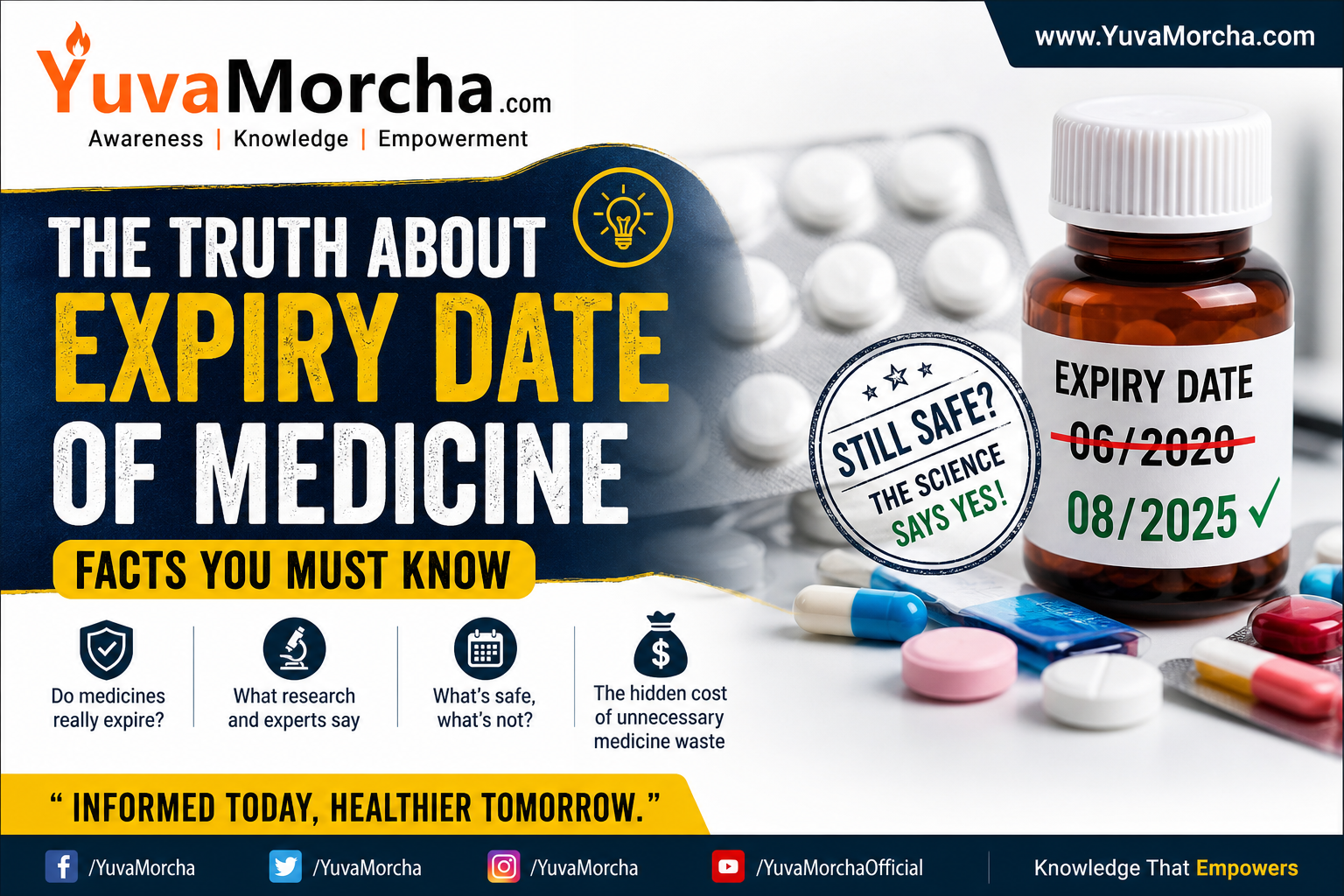


Do Medicines Really Expire? The Truth About Expiry Dates You Must Know.
Do medicines really expire or just lose potency? Discover the scientific truth behind drug expiry dates, FDA research, safety risks, and what you should never use after expiry.
🩺 Introduction
Walk into any home and you’ll likely find a medicine strip or bottle marked with a strict expiry date. Most people assume that once this date passes, the medicine becomes dangerous and must be discarded immediately.
But is that really true?
The concept of expiry dates on medicines is widely accepted—but not widely understood. While these dates are meant to ensure safety and effectiveness, emerging research suggests the story may not be as straightforward as we think.
This article explores the science, myths, and realities behind medicine expiry dates—and whether consumers are sometimes discarding perfectly usable drugs.
📜 A Brief History of Medicine Expiry Dates
Before the late 20th century, medicines did not always carry expiry dates. It was only in 1979 that the U.S. Food and Drug Administration mandated pharmaceutical manufacturers to print expiry dates on drug packaging.
The purpose was simple: ensure that medicines maintain their full safety and effectiveness up to a specified date.
However, this regulation did not necessarily imply that medicines become harmful immediately after expiry.
🧠 What Does an Expiry Date Actually Mean?
An expiry date is the point until which a manufacturer guarantees:
- Full potency (effectiveness)
- Safety under recommended storage conditions
- Stability of chemical composition
Importantly, it does not always mean the medicine suddenly becomes toxic or ineffective after that date.
Instead, most drugs gradually lose potency over time.
🧪 What Research Says About Expired Medicines
One of the most widely cited studies comes from the U.S. government’s Shelf Life Extension Program (SLEP)—a collaboration involving the military and regulatory authorities.
Key Findings:
- Many drugs retained 90% or more potency years after expiry
- Some medications were still usable up to 10–15 years beyond expiry
- Only a small percentage showed significant degradation
This program was initiated because the U.S. military faced massive losses from discarding unused medicines worth billions.
💊 Are Expired Medicines Still Safe?
The answer is: it depends.
✅ Generally Safe (with reduced potency)
- Tablets and capsules (e.g., Paracetamol)
- Solid-form medications stored properly
These usually lose strength gradually, meaning they may be less effective but not harmful.
⚠️ Use with Caution or Avoid
Certain medicines can degrade unpredictably:
- Insulin
- Nitroglycerin
- Liquid antibiotics
- Eye drops
- Reconstituted syrups
These are more sensitive to environmental conditions and can become unsafe or ineffective after expiry.
🧴 The Special Case of Aspirin
Studies on Aspirin show that it remains relatively stable for years if stored correctly. However, degraded aspirin can develop a vinegar-like smell, indicating chemical breakdown.
Even when not harmful, reduced potency can make it less effective for pain or cardiovascular use.
💰 The Economic Angle: Waste vs Safety
The global pharmaceutical industry is worth trillions, and expiry-driven disposal contributes to:
- Massive household medicine waste
- Increased healthcare costs
- Environmental concerns from drug disposal
However, calling expiry dates a “marketing trick” is an oversimplification.
Pharmaceutical companies are legally required to:
- Provide scientifically validated stability data
- Ensure patient safety under all conditions
Extending expiry dates universally would require extensive testing, which is costly and complex.
⚖️ The Balanced Truth
Here’s what science and regulation together suggest:
✔ Expiry dates are conservative safety estimates
✔ Many medicines last longer than labeled
✔ Potency—not toxicity—is the main concern in most cases
❌ But some drugs can become unsafe or ineffective
🚨 When You Should NEVER Use Expired Medicines
Avoid expired drugs if:
- Treating life-threatening conditions
- Using injectables or biologics
- Medicine shows color change, odor, or damage
- It’s a liquid or refrigerated drug
In critical cases, reduced potency can mean treatment failure, which is far more dangerous than the medicine itself.
🏥 Practical Advice for Consumers
Here’s a safe and practical approach:
✅ You may consider using (with caution):
- Recently expired tablets (within months)
- Medicines stored in cool, dry conditions
❌ Always discard:
- Expired liquid medicines
- Opened syrups or suspensions
- Sensitive drugs (insulin, heart meds)
💡 Pro Tip:
Always consult a doctor or pharmacist before using expired medication.
🌍 The Way Forward
Healthcare systems worldwide are exploring:
- Extending shelf life through real-time stability testing
- Reducing waste via controlled programs like SLEP
- Increasing public awareness about proper medicine use
Balancing safety with sustainability is the key challenge.
🧾 Conclusion
The truth about medicine expiry dates is nuanced.
While many drugs do not suddenly become dangerous after expiry, blindly using expired medicines is not advisable either.
Expiry dates are not just marketing tools—they are part of a broader system designed to ensure patient safety under all conditions.
The smarter approach is awareness:
- Understand which medicines are stable
- Recognize which ones are not
- Make informed decisions rather than reactive ones
📢 Final Thought
Before throwing away your next strip of tablets, pause and ask:
Is it truly unsafe—or just slightly less effective?
The answer might surprise you—but your health should always come first.
YuvaMorcha.com
More Featured Posts:
India’s Rise as a Global Superpower: How Narendra Modi’s Leadership Is Shaping the 21st Century.
The Mother of All Deals: Decoding the Historic India-Europe Free Trade Agreement of 2026.
The Mother of All Deals: Decoding the Historic India-Europe Free Trade Agreement of 2026.
SIDBI – Powering India’s MSME Growth: Funding, Schemes & Business Support.
MSMEs in Hospital Segment Set to Experience Significant Y-o-Y Growth.”
Festive Cheer: India’s Discretionary Spending Sees Sharp Rise
The Ultimate Guide to Collateral-Free Business Finance: Scaling Beyond Physical Assets.
Top 10 Angel Investment Networks in India (2026): The Ultimate Founder’s Guide to Fundraising.