


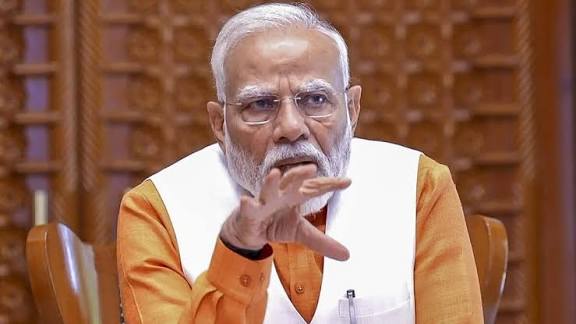


Modi Unveils Bold Trilateral Tech Powerhouse: The ACITI Partnership with Australia & Canada at G20 Summit:
On a momentous Saturday at the G20 Summit in Johannesburg (November 22, 2025), Prime Minister Narendra Modi announced a game-changing trilateral initiative with Australia and Canada, the Australia-Canada-India Technology & Innovation (ACITI) Partnership.
Taking to X (formerly Twitter), PM Modi called it a “delight” to jointly launch this partnership, which he described as a powerful alliance of three democratic nations spanning three continents and three oceans.
Why ACITI Matters:
Deepening Innovation Ties: The ACITI Partnership aims to foster collaboration in emerging technologies.
Supply Chain Resilience: One of its goals is to diversify global supply chains , a priority in a world still adjusting to geopolitical disruption.
Clean Energy & AI Push: ACITI will support clean energy development and encourage mass adoption of artificial intelligence, signalling shared ambitions on sustainability and digital transformation.
Future Generations: Modi emphasized the long-term vision: “We look forward to working together to guarantee a better future for coming generations.”
Bigger Picture: Modi’s Global Agenda at G20
But ACITI wasn’t the only major idea Modi floated at the G20. In his remarks, he stressed the need for a profound rethink of global development parameters.
He laid out two bold proposals:
1. A G20 Initiative to Counter the Drug-Terror Nexus
Modi called for a coordinated global effort to dismantle the intertwined economy of drug trafficking and terrorism, pointing especially to the growing threat of synthetic substances like fentanyl.
2. A Global Healthcare Response Team
In an increasingly volatile world, he proposed a rapid-response health force under G20 to tackle cross-border health crises.
Adding another layer to his vision, Modi also proposed the creation of a Global Traditional Knowledge Repository under the G20, aimed at preserving and sharing wisdom from diverse cultures — particularly ecological and socially sustainable practices.
Diplomacy in Action: Bilateral Engagements:
The ACITI announcement came on the heels of bilateral meetings:
With Australia’s PM Anthony Albanese, Modi reaffirmed their deepening ties across strategy, defence, technology, trade, and education.
With Canada’s PM Mark Carney, he underscored the importance of strengthening collaboration to confront global challenges.
These face-to-face talks are not just symbolic; they demonstrate a tangible shift toward building multilateral frameworks beyond traditional blocs.
Why This is important:
1. Tri-continental Tech Alliance: A partnership like ACITI — linking democracy, innovation, and clean energy across three continents — is big news. It’s fresh, forward-looking, and offers hope for a more collaborative future.
2. Global Security + Health Ideas: Modi’s proposals to tackle drug-terror linkages and launch a healthcare rapid-response team address urgent, high-stakes global issues.
3. Narrative of Leadership: By pushing for these initiatives, India projects soft power and strategic leadership , potentially resonating strongly across the Global South.
4. Human-Centric Vision: The mix of technology, traditional wisdom, and healthcare shows a holistic vision — not just geopolitics and economics, but well-being, sustainability, and cultural preservation.
With the ACITI Partnership, PM Modi isn’t just strengthening bilateral ties , he’s building a tech-innovation bridge across continents. Coupled with his call for global initiatives on drugs, terrorism, and health, India is positioning itself not just as an economic powerhouse, but as a protector of global commons. The Johannesburg G20 could well be remembered as a turning point in shaping a more cooperative world order.



Thank you for your sharing. I am worried that I lack creative ideas. It is your article that makes me full of hope. Thank you. But, I have a question, can you help me?
Can you be more specific about the content of your article? After reading it, I still have some doubts. Hope you can help me.
Your point of view caught my eye and was very interesting. Thanks. I have a question for you.